
Epoxy Garage Flooring
in Murray, KY
A hardworking floor built to handle oil, weight, and daily wear far better than bare concrete.
Your Garage Should Feel Like Part of Your Home
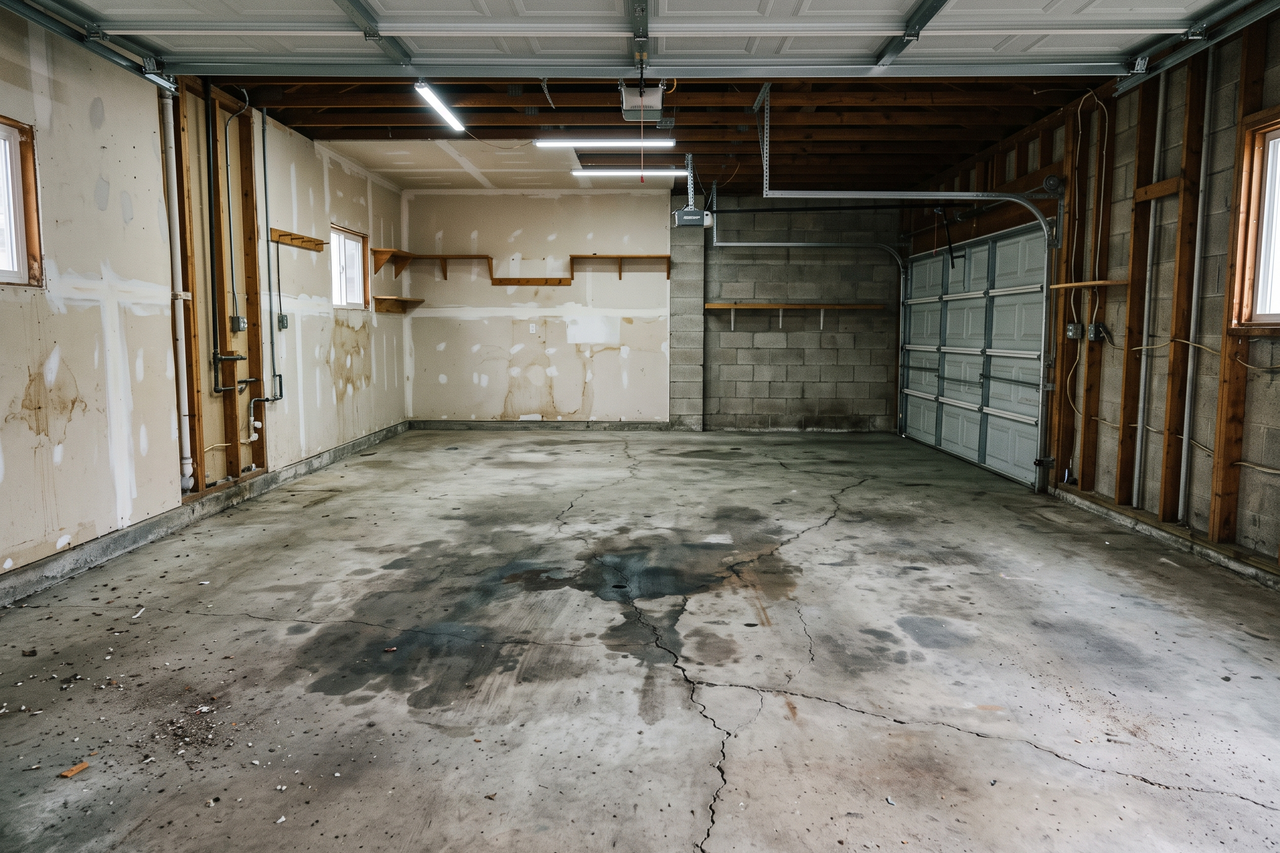
Bare concrete holds up well as a structural material, but it was never designed to be a finished floor. A garage slab gets oil dripped on it, scraped by tool edges, rolled over by loaded carts, and ground down by vehicle traffic — all on a surface that offers no protection against any of it. What starts as a workable if unattractive slab gradually becomes harder to maintain and harder to ignore.
Without a sealed surface, concrete absorbs whatever lands on it. Fluids pull into the pores before there is time to address them, and residue left behind becomes part of the slab over time. The fine dust concrete sheds continuously coats stored items and works its way onto surfaces nowhere near the floor itself.
Shelf-bought coatings can look like a practical fix until the concrete they’re applied to hasn’t been properly prepared. Paint bonded to raw, unprofiled concrete lacks the mechanical grip that heavy use demands. Parking loads, seasonal temperature swings, and heat from braking surfaces expose that weak connection faster than most product labels lead homeowners to expect.
You Don't Have to Know Which Garage Floor Coating Is Right
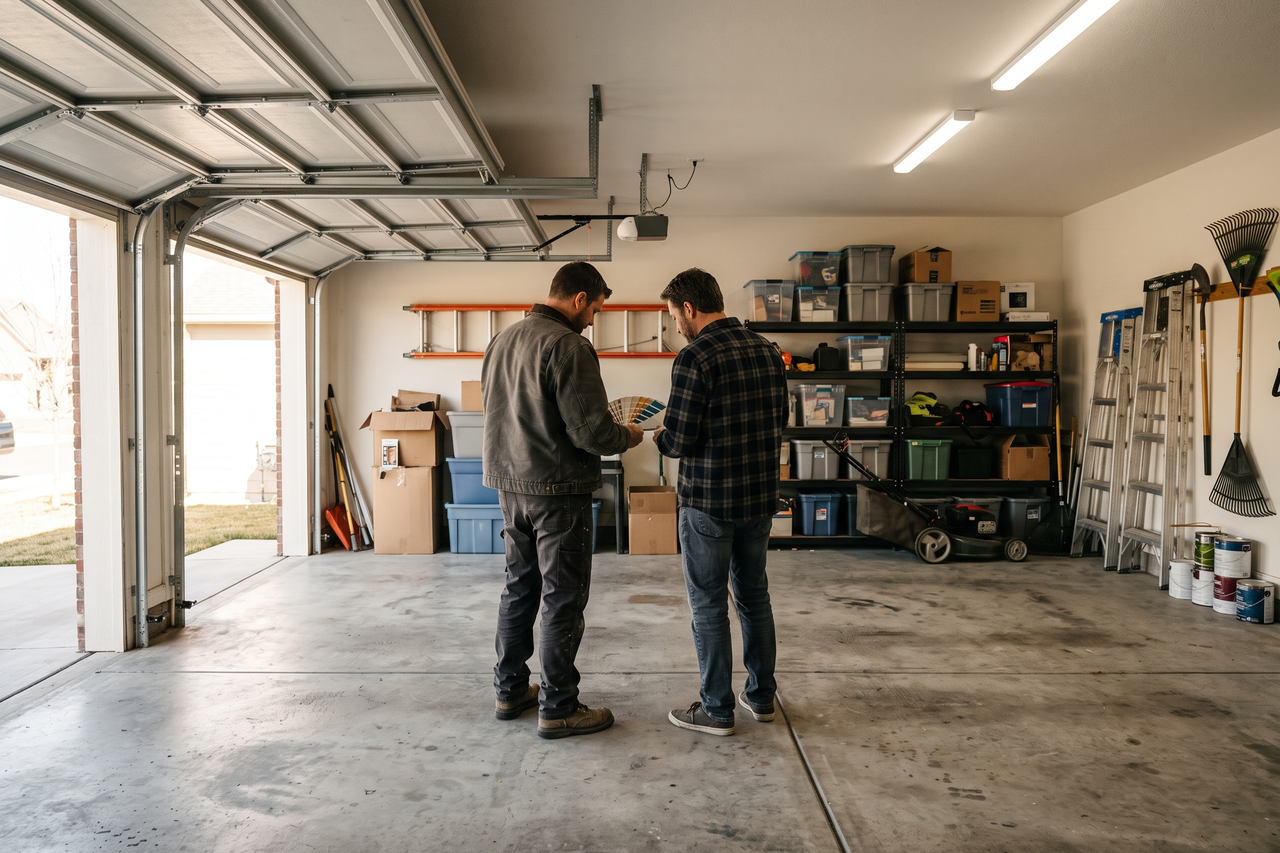
Garage coating systems vary considerably, and what performs well in one situation doesn’t automatically apply to the next. A slab that has absorbed years of oil, shows active cracking, or catches direct afternoon sun carries different requirements than concrete in a newer build that has been kept clean. Committing to a product before any of that is assessed is how projects end up needing to be done over.
A flooring contractor begins with the concrete itself — reading what moisture behavior it shows, cataloguing damage that needs addressing, and noting any previous treatments or sealers. From there, the viable options narrow considerably. Decorative flake suits spaces with heavy traffic where texture and color both matter. A metallic system fits situations where the floor’s visual character carries real weight.
Your Garage. Your Style. Three Simple Steps.
Moving from a bare slab to a finished garage floor involves three straightforward steps.
01
Show Us Your Garage
Share what the space handles on a regular basis, how the concrete looks today, and the kind of finished result you’re hoping for.
02
Choose Your Floor
The flooring contractor inspects the slab in person, identifies the coating options suited to its condition, and puts together a quote calibrated to the specific project in front of them.
03
Come Home to a Finished Garage
The contractor handles the concrete preparation, installs the selected system, walks you through what curing involves, and returns the finished floor to your use.
Ready to See What Your Garage Could Become?
Tell us about the garage and what outcome you have in mind. We’ll work to connect you with an independent flooring contractor who can review the project and, if it’s a fit, prepare a customized quote.
The Wrong Garage Floor Can Cost You Twice
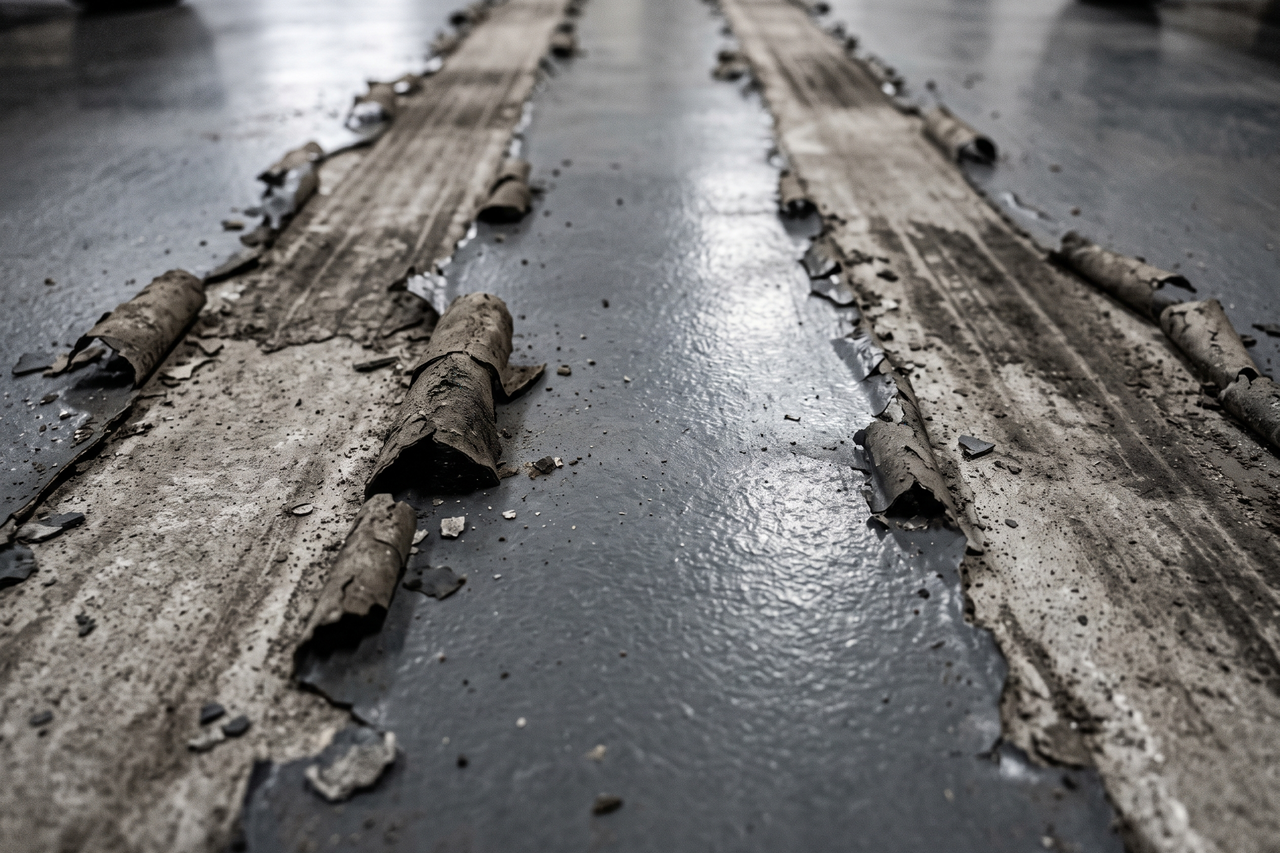
When a garage coating starts to fail, the causes rarely trace back to a single oversight. Preparation is often part of the problem — rushed or incomplete concrete work, moisture that went unevaluated, a product chosen without regard for the actual conditions, or application in temperature and humidity outside the manufacturer’s specifications all play a role. Any combination of these leaves the new coating compromised before vehicles ever roll across it, and peeling edges or delamination under tire paths frequently follow.
Attempting to coat over a failing system compounds the problem rather than correcting it. Everything that has separated or degraded has to be stripped back to bare concrete before anything new can go down — and that removal is a project in its own right, with associated costs that often surprise people.
Getting the right coating over properly prepared concrete gives the project a better foundation for long-term performance than a lower-cost installation that skips essential steps — steps that tend to announce themselves in how soon the floor needs attention again.
A Garage You're Proud to Come Home To
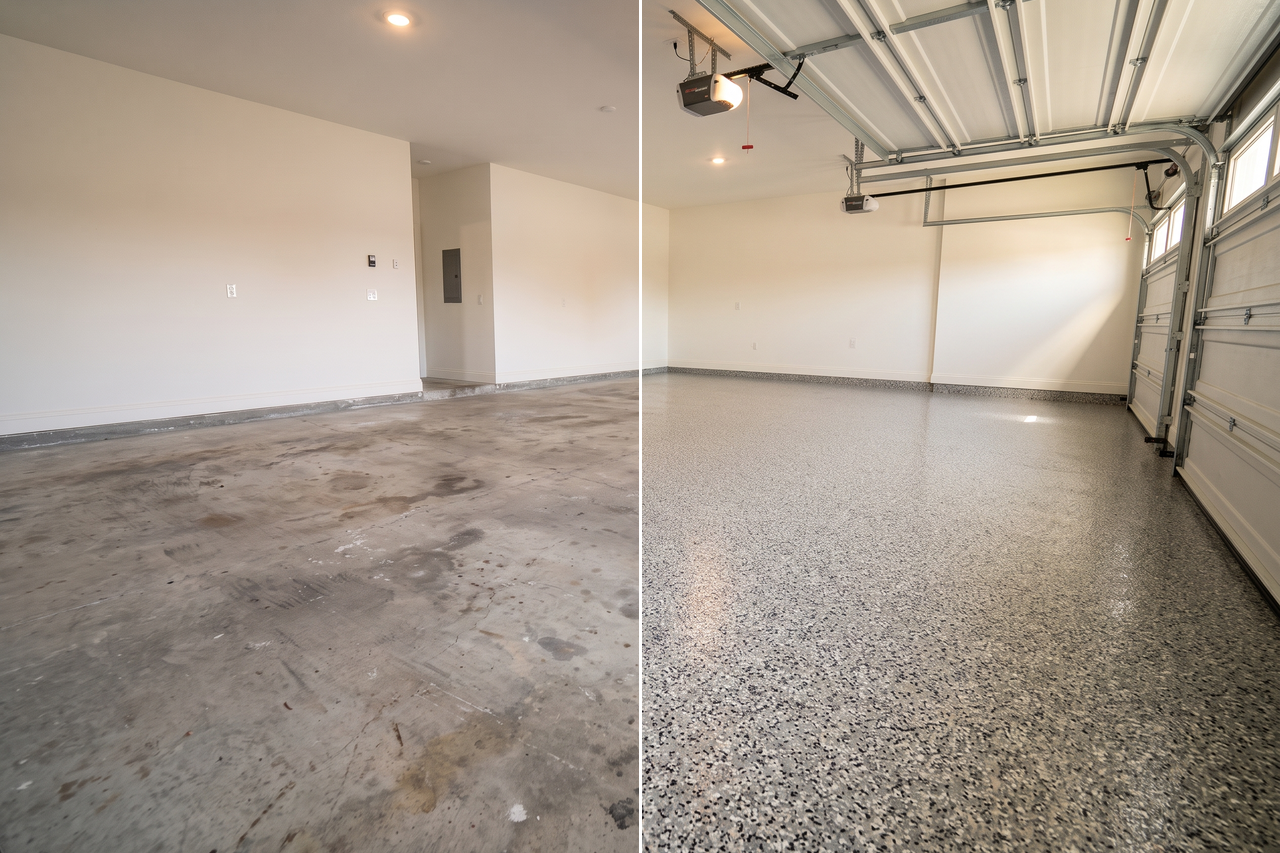
Once the floor is properly sealed, the garage functions differently. Spills that used to soak into the concrete can be wiped away. The fine particulate that bare concrete constantly produces is greatly reduced. A sealed surface stands up to what gets tracked across it far better than bare concrete does.
That shift changes how the whole space works — not just how it looks. Parking, storage, project work, and anything else that happens in that room takes place on a floor that supports the activity rather than complicating cleanup afterward.
Consider how the garage is actually used most — who parks there, what gets built or stored, how often the door goes up and down. That picture helps define what a finished floor should accomplish and what it should look like when the job is done.
What Does Garage Floor Coating Cost?
Garage floor coating projects span a wide range. Square footage is one piece of the picture, but so is the condition of the concrete, the preparation and repair work the slab requires, the coating system selected, and the finish type. Solid color, flake, and metallic finishes call for different materials and different application requirements.
The figure that means anything for your specific project comes from someone who has seen the floor. A quote built around the actual condition of the concrete and what you want from the result is the only number worth planning around.
Common Garage Floor Questions
Can a professional coating hold up against hot tires?
Hot-tire contact puts real stress on bonded floor surfaces, and consumer-grade paints on unprepared concrete often don’t handle it well. A professional-grade coating system applied over a mechanically prepared slab is built to withstand that heat load more reliably. Both the product choice and the quality of the concrete preparation factor in, which is why the contractor assesses those specifics before making a recommendation.
Can a slab with cracks or oil contamination still be coated?
Both conditions are addressed as part of the preparation work that precedes any coating installation. Crack repair is built into the prep process, and oil-contaminated areas are degreased and pre-treated before the slab is profiled. Where oil has penetrated particularly deep, the contractor takes a closer look and provides an honest assessment of what the concrete can realistically support.
Is a high-gloss garage floor slippery when wet?
A polished, smooth coating provides reduced grip underfoot when wet compared to a textured surface. Broadcast flake incorporated into the coating layer addresses that directly by adding texture across the full floor. In areas where water concentrates — near the garage entry or around floor drains — a slip-resistant additive can be worked into the topcoat for additional grip where it counts.
How soon can vehicles return to the garage after coating?
The timeline is shaped by the coating system and the installation environment — including temperature and humidity when the work is done. The contractor explains what to expect before starting, so the household can plan around the space accordingly.