
Epoxy Basement Flooring
in Murray, KY
Give a neglected basement slab a finished surface worth building the rest of the room around.
Your Basement Shouldn't Feel Unfinished From the Floor Up
Basement space tends to be underused in proportion to how neglected its floor is. Raw concrete reads as unfinished, and an unfinished floor quietly signals that the room itself isn’t ready for serious use — whether the goal is a gym, a home office, an organized utility area, or a dedicated project space. The floor sets that tone before anything else in the room gets a chance to.
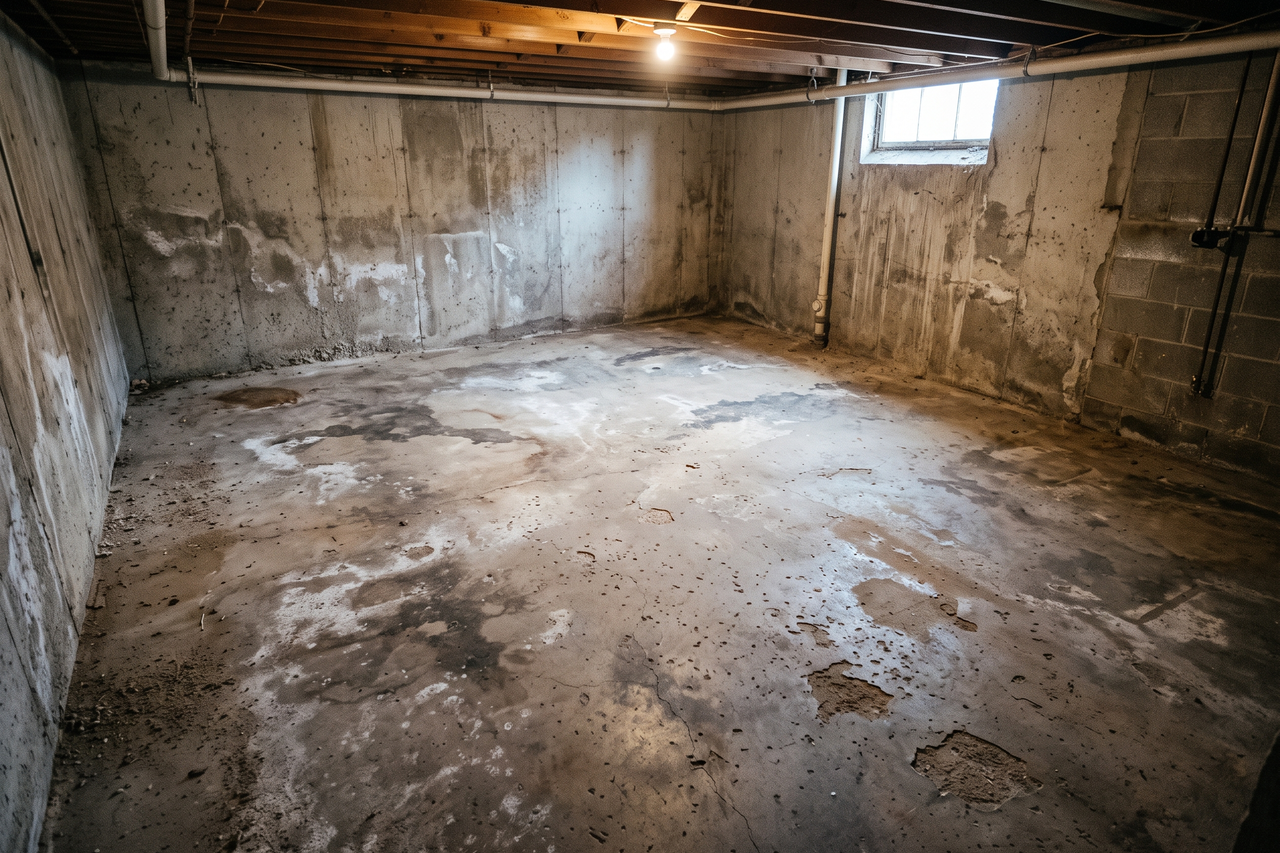
Maintaining bare basement concrete is a low-reward effort. Below-grade slabs generate fine dust that settles on stored items, equipment, and anything else near the floor. Spills absorb quickly and leave stains that won’t clean out, and the rough surface makes the space harder to keep presentable regardless of how consistently it’s swept.
Materials that hold up well elsewhere in the home can struggle on a slab sitting at or below grade. The moisture dynamics of a concrete floor at ground level differ from finished living spaces above it. A coating engineered for concrete gives that environment a surface that fits what it actually demands rather than fighting against it.
The Right Basement Floor Starts With the Concrete Underneath
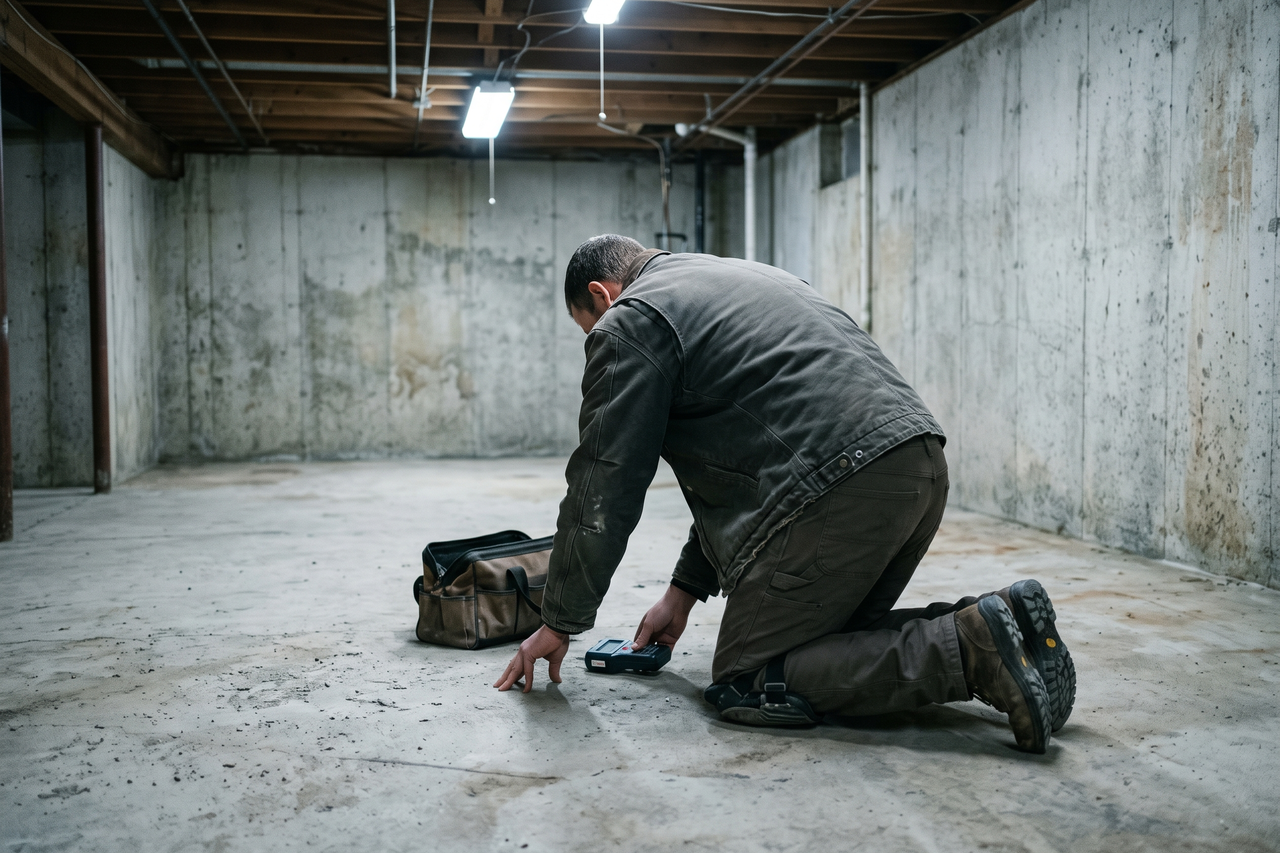
Below-grade slabs present conditions that above-grade concrete rarely shares. Water vapor transmitting upward through the concrete, pressure from the surrounding soil, adhesive or paint left from prior flooring, existing crack patterns, and past patch repairs all contribute to what surface preparation must accomplish before a new coating can bond reliably.
The contractor evaluates the slab before a coating system is chosen — checking moisture behavior and assessing the concrete’s overall condition. Bypassing that evaluation on a below-grade floor leaves moisture variables unaddressed, and moisture working against the bond from beneath the surface can cause problems that weren’t visible when the job started.
Once the slab’s condition is properly understood, selecting a finish becomes more straightforward. A solid-color coating produces a clean, consistent result. Broadcast flake adds texture suited to regular foot traffic. Metallic epoxy builds a layered visual depth that painted floors cannot replicate.
A Better Basement Floor Is Easier Than You Think
The process is simpler than most people expect.
01
Tell Us About Your Basement
Let us know what you want to do with the space, what the floor looks like today, and whether moisture has been a factor or an earlier coating has already been applied.
02
Choose the Right Floor
Once the contractor evaluates the slab, the coating options suited to its condition are identified, and a finish that fits both the concrete’s requirements and your plans is recommended.
03
Transform the Space
The contractor handles the concrete prep, applies the selected system, explains what curing involves, and returns the finished floor to you.
Ready to Make Your Basement Feel Finished?
Tell us about the basement and what you’re hoping to create. We’ll work to connect you with an independent flooring contractor who can review the project and, if it’s a fit, prepare a customized estimate.
Don't Turn Your Basement Floor Into a Project You Have to Do Twice
Most basement coating failures have identifiable preconditions. Residue from an earlier sealer or adhesive that wasn’t removed, concrete that was never profiled to the texture a new coating needs, and moisture that went unevaluated — these are recurring contributors to installations that don’t hold. Each one is present before the coating ever goes down.
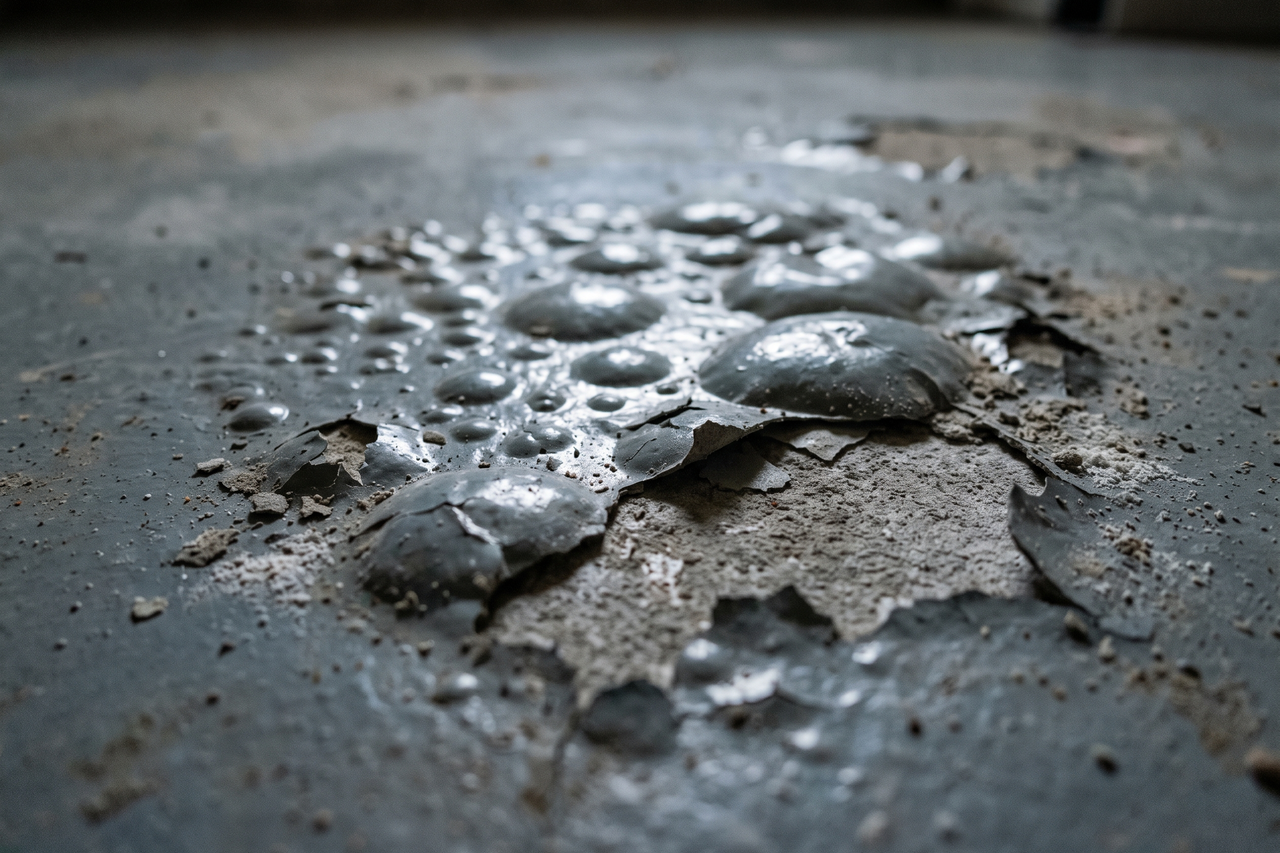
Moisture in a below-grade slab behaves differently than in an above-grade installation. When vapor transmission or pressure from the surrounding soil isn’t accounted for before a coating is applied, the forces working beneath the surface can push the coating loose from below — showing up as bubbling, separation, or lifting in areas that looked unremarkable at the outset. Preparation that addresses those variables is often part of the problem that gets skipped in lower-cost installations.
Thorough profiling, patching, and moisture evaluation establish a better foundation for long-term performance. Without those steps, removing a failed system and starting fresh becomes a real and costly outcome.
A Floor That Changes How Your Basement Feels
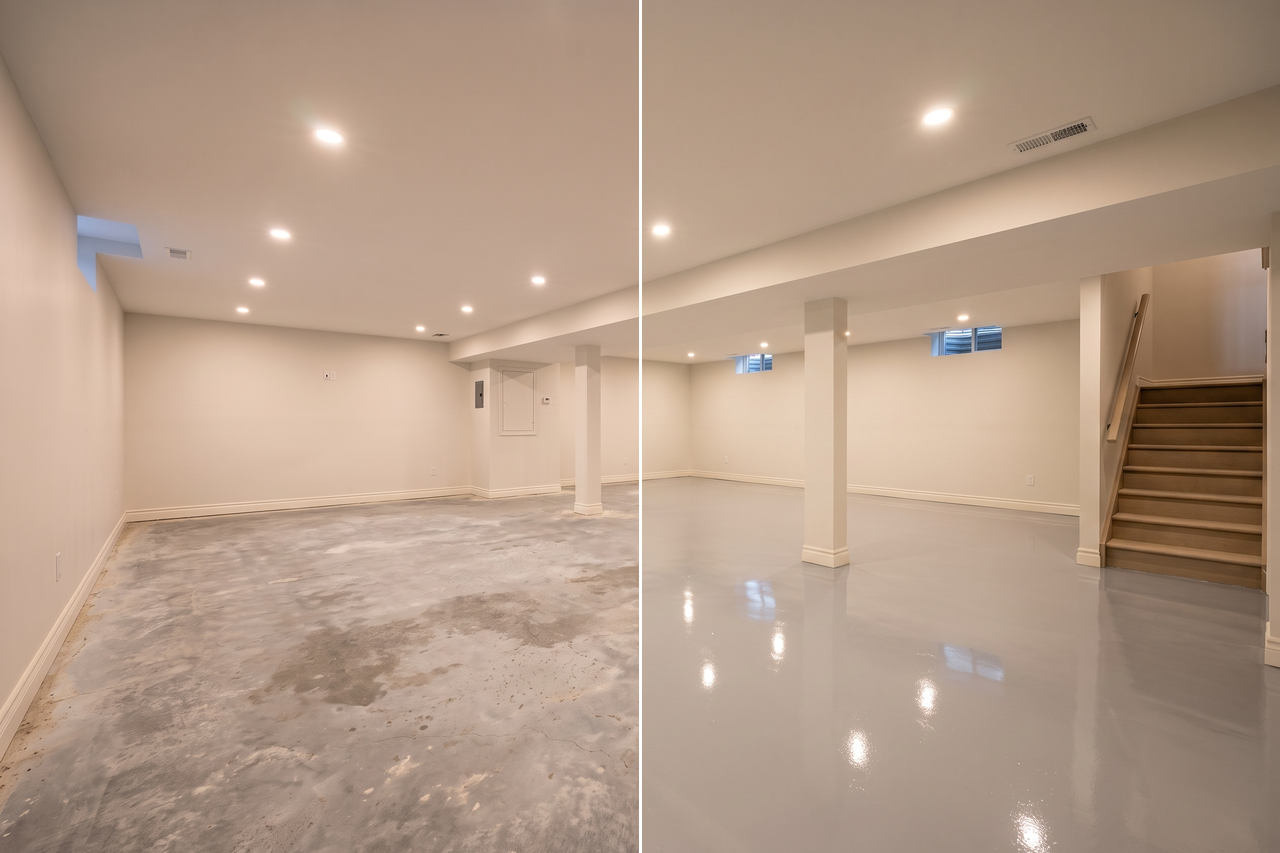
A sealed concrete floor changes the sensory experience of a basement. Light reflecting off a smooth, finished surface opens the room in a way that flat gray concrete never does. Debris tracked onto the floor can be swept away cleanly, and spills can be addressed before they reach the porous material beneath.
That change is functional as well as visual. A basement used primarily as a pass-through or a holding area for overflow becomes a room people are willing to spend real time in. The floor is often what determines which of those two versions of the room actually gets used.
What a basement becomes next frequently comes down to how its floor has been treated. A finished, sealed surface doesn’t just look different — it communicates that the room was taken seriously, and that tends to change how people engage with the space.
What Does Epoxy Basement Flooring Cost?
Several variables shape the final cost of a basement coating project: square footage, what the slab inspection reveals about condition and moisture behavior, whether earlier coating or adhesive requires removal, the extent of crack repair, and the system and finish selected.
Because slab conditions vary enough to make general estimates unreliable, the figure worth planning around comes from someone who has actually looked at the concrete. The contractor builds the estimate from what the concrete reveals and how the room is intended to be used.
Common Questions About Epoxy Basement Flooring
Can a basement slab that shows signs of moisture still be coated?
It depends on the source and severity — both need to be understood before a coating system is selected. Some situations can be managed with a compatible primer or vapor-mitigation system; others require resolving the moisture source before any coating is appropriate. The contractor evaluates what the slab shows and gives a clear picture of what the concrete can support and under what conditions.
Does a floor coating make a basement waterproof?
No. A floor coating addresses the concrete surface — it doesn’t stop water entering through walls, foundation cracks, or from exterior drainage problems. Water that enters through walls or the foundation needs to be addressed at its source first. Installing a coating over an active water intrusion problem typically ends in failure.
Does old residue, paint, or adhesive need to come off the slab before coating?
In most cases, yes. Existing coatings, adhesives, and surface residue interfere with the bond a new coating depends on. Applying a new product over unprepared material rather than profiled, clean concrete compromises the result. The contractor determines what surface preparation is required to bring the slab to the condition the coating system needs.
How does a coated basement floor feel underfoot compared to bare concrete?
The slab itself hasn’t changed — it remains firm and stays close to the ambient temperature of the floor. What changes is the finish layer: a rough, dusty concrete surface becomes smooth and sealed. Floor mats and area rugs sit on a coated basement floor just as they would on tile, hardwood, or any other finished surface.
Which finish options work best for a basement floor coating?
Most basement projects fall into one of three finish categories. A solid-color system delivers a clean, uniform appearance. Broadcast flake creates a textured surface that handles steady foot traffic and conceals everyday scuffs well. The metallic option produces a layered, high-gloss look that turns the floor into a visual centerpiece of the room. The best match depends on what the room demands and what you want the floor to look like when it’s complete.