
Industrial Epoxy Flooring
in Murray, KY
A floor coating built around your facility’s actual demands — the loads the slab bears, the substances that reach it, and the cleaning cycles it goes through on a regular basis.
Your Floor Takes the Abuse. Your Operation Shouldn't
A production floor faces conditions most concrete never encounters at that sustained level. Loaded vehicles travel fixed paths repeatedly, concentrating impact along the same routes. Equipment sits on fixed footprints and transfers force into the slab beneath it on a continuous basis. Process fluids, lubricants, and cleaning compounds find every unsealed pore and developing crack the concrete offers.
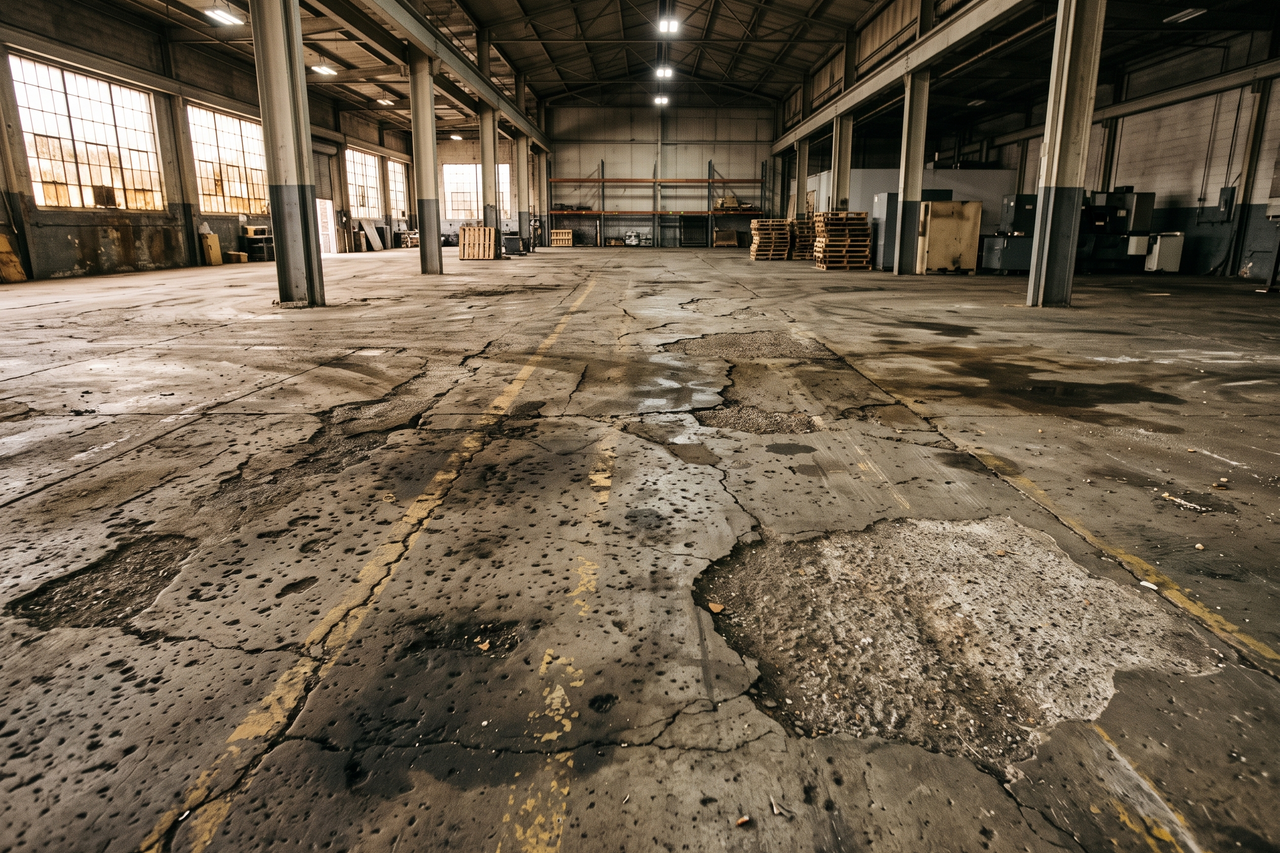
In the early phases of a facility’s operation, bare concrete holds up reasonably well. Over time, the effects accumulate. Abrasion from vehicle and equipment traffic produces fine particulate that disperses through the space. High-use equipment positions and travel corridors develop damage and surface irregularities. Zones that regularly contact process chemicals become stained below the surface and stop responding to routine cleaning.
Enough accumulated damage changes how the facility operates at floor level. Rolling stock has to navigate deteriorating surfaces. Cleaning efforts produce less with each pass as the concrete continues opening. The floor’s visible state conveys something about how the facility is managed — to people working inside it and to any outside party who visits.
Your Facility Determines the Right Flooring System
Industrial coating products differ considerably from one another. Applied thickness, abrasion tolerance, load-handling capacity, chemical resistance, and surface texture each vary across product categories. No single formulation answers every industrial environment equally well, and selecting the right fit for a specific facility requires understanding more than the concrete’s physical condition.
A contractor assessing an industrial floor maps the full operational context: what types of vehicles and equipment use the space and how often, which substances reach the floor surface and in what concentrations, how and how often the floor gets cleaned, whether temperature cycling at the slab is a concern, and whether the project calls for defined zones, aisle markings, or surface textures built into the specification.
A refrigerated distribution bay and a busy fabrication floor operate under completely different conditions. Heat exposure, moisture presence, and chemical contact create environment profiles that call for different product decisions. The evaluation is what connects published specifications to the actual working demands of a specific facility.
Built Around Your Facility. Not the Other Way Around
Getting the specification right on an industrial floor means establishing a complete picture of the facility’s operation before a product is chosen or a schedule is set.
01
Evaluate the Facility
The contractor inspects the slab condition, documents equipment positions and traffic patterns throughout the facility, records existing wear and surface damage, and identifies the preparation the concrete requires before any coating is applied.
02
Build the Right Flooring Plan
From the site assessment, the contractor assembles a system recommendation, defines the preparation scope, and identifies concrete repairs the job requires — reviewing the complete plan with the facility before any commitment is finalized.
03
Put Your Floor to Work
Work begins according to a project sequence reviewed and agreed upon with the facility in advance. How that sequence plays out depends on the project and the contractor.
Need a Floor Built for a Tougher Environment?
Tell us about the conditions your floor operates under and what the project has to accommodate. We’ll work to connect you with an independent flooring contractor who can review the project and, if it’s a fit, prepare a customized estimate. Photos of worn areas or problem zones help frame the conversation.
Floor Failure Creates Problems Beyond the Floor
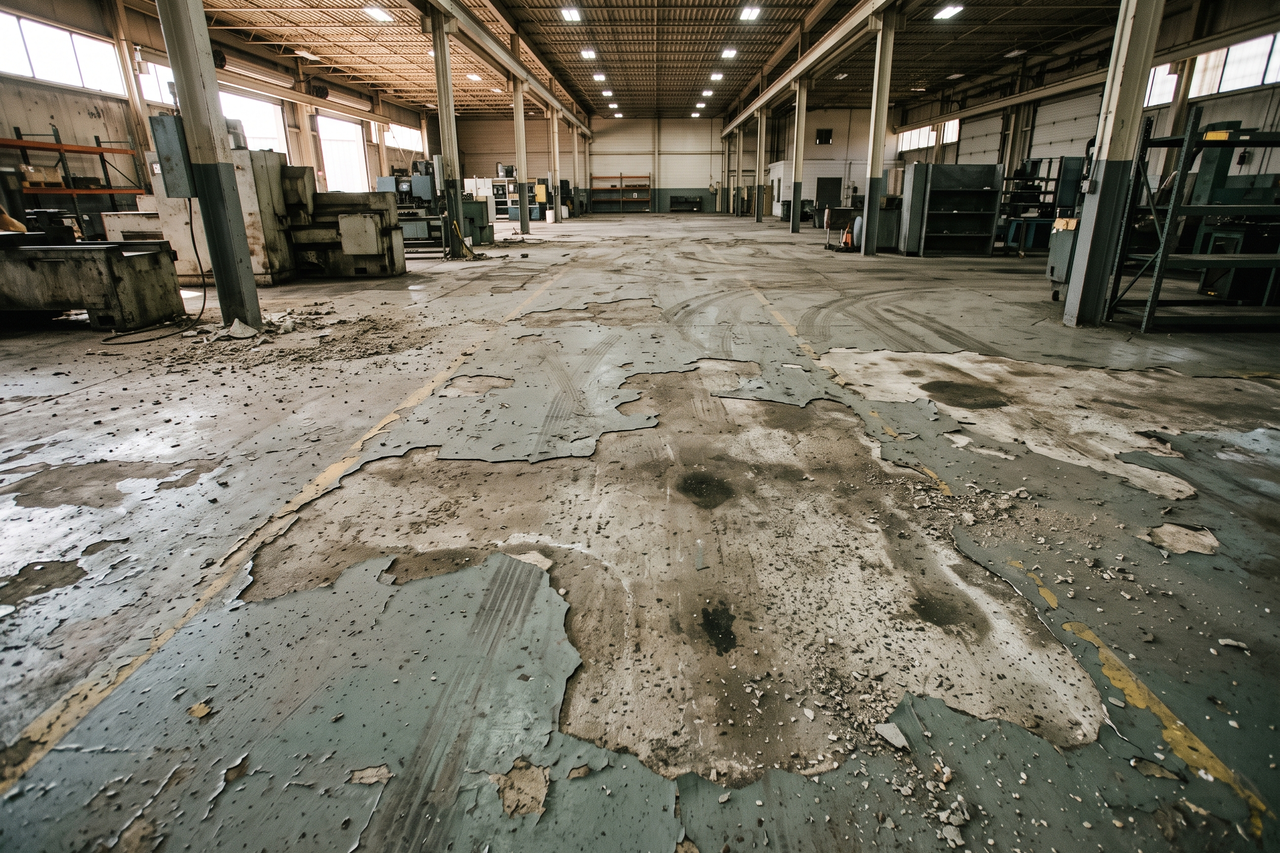
A coating that loses its bond to the concrete does not stay put. Broken sections migrate into aisles and gather around equipment bases, turning a floor problem into something the operation has to actively manage around. Areas that once supported daily workflows become obstacles requiring active avoidance.
Concrete exposed beneath a failed coating is more difficult to reclaim than a slab that came into the job well prepared. Contaminants from years of operation have penetrated the surface, and keeping pace with ongoing deterioration grows harder as the unprotected area expands.
Restoring an industrial floor after coating failure involves a more extensive scope than most facilities anticipate. The affected area must come offline, equipment cleared from the zone, the existing material stripped, and the slab restored to a condition suitable for a properly applied new system. What that total recovery costs frequently exceeds what a correctly specified original installation would have required.
A Floor That Keeps Up With Your Operation
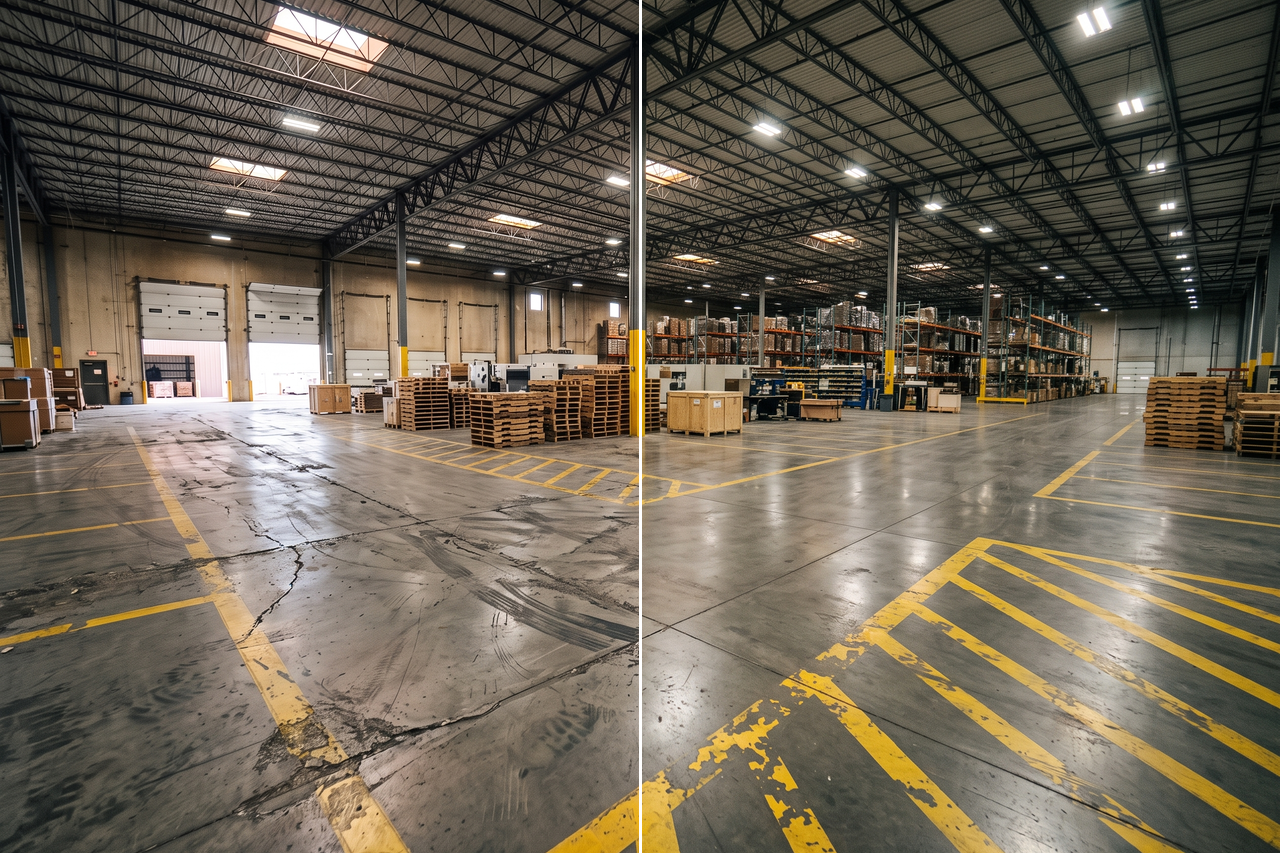
A coating specified for what the facility actually asks of its floor changes the maintenance picture. Routine traffic, repeated washdown cycles, and chemical contact land on a surface selected to handle those conditions — rather than bare slab that absorbs everything reaching it. Cleaning produces better results when the floor isn’t the obstacle.
Sealing the concrete substantially reduces dust output — a practical benefit wherever equipment uptime and air quality are operational priorities. A coated surface returns significantly more light from overhead fixtures, brightening wide production and storage areas without any change to the lighting infrastructure.
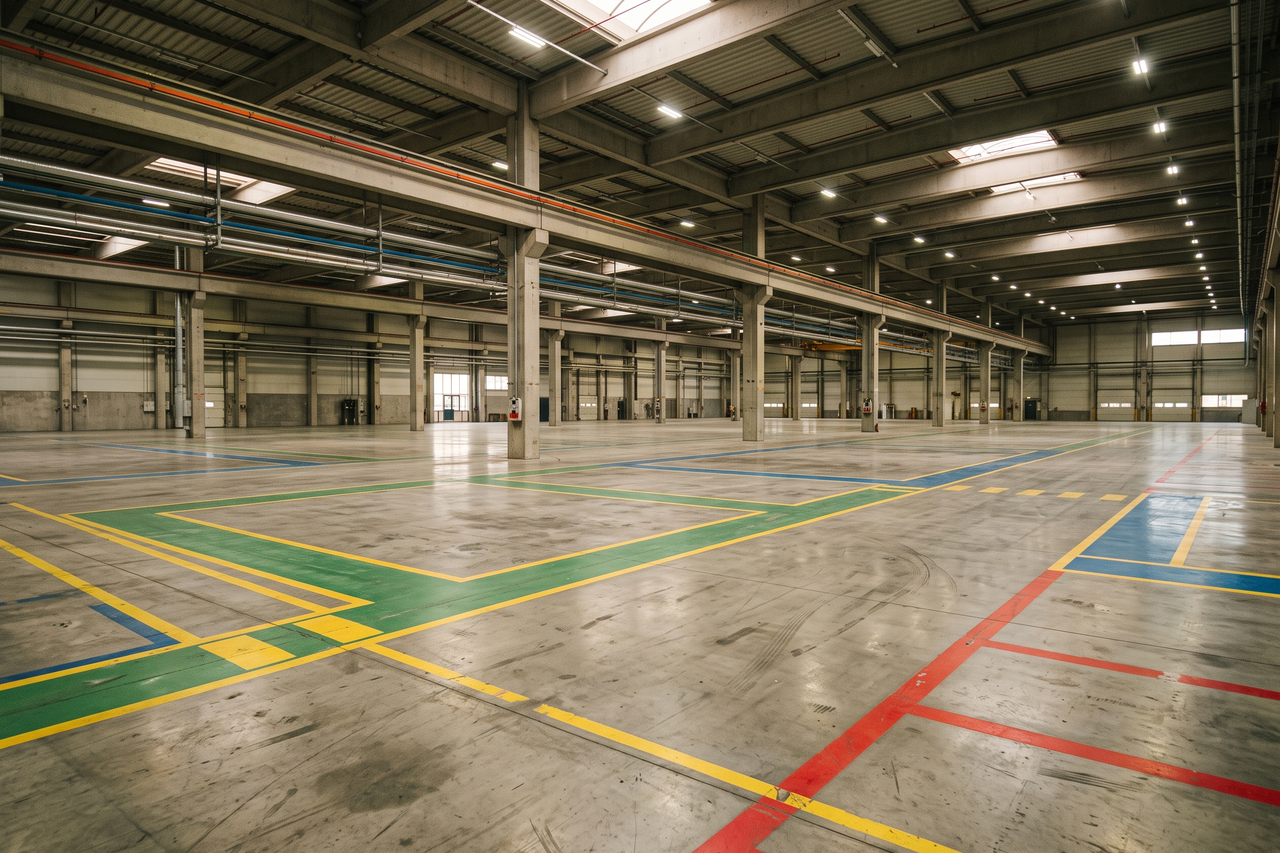
Safety zone boundaries, aisle markings, and surface textures that add traction can be built into the specification based on the coating system and what the contractor determines is appropriate for the space. When the floor is built around what the operation actually needs, it contributes to how the facility runs rather than becoming another recurring demand on it.
What Does Industrial Epoxy Flooring Cost?
What it costs to coat an industrial floor depends on a set of project-specific variables: the square footage being addressed, the slab’s current state, how extensive the surface preparation and any concrete repair work will be, the selected system’s build characteristics and resistance profile, and whether surface markings or traction textures are included.
No per-square-foot figure carries meaningful weight for an industrial project in isolation. A contractor examines the concrete, understands the facility’s operational demands, and works through everything the project calls for before arriving at a price.
Common Industrial Flooring Questions
What about forklifts and pallet jacks?
Which systems hold up under powered industrial equipment depends on the specific formulation and the loads your vehicles actually place on the floor — weight, tire compound, and crossing frequency all factor in. Some products are formulated to handle sustained powered-vehicle loads; others are not built for that use. The contractor examines those parameters during the site evaluation before arriving at a recommendation.
How does the coating handle oils, process fluids, and cleaning chemicals?
Resistance to chemical exposure varies substantially across product formulations, and a system suited to one type of exposure may not perform as well under a different chemical profile. Identifying the specific substances that reach the floor — lubricants, process fluids, cleaning agents — gives the contractor the information needed to assess whether a product holds up under real operating conditions rather than broad exposure categories.
Can zone designations and safety markings be built into the floor?
Often, yes. Safety zone boundaries, defined aisle paths, directional markings, and traction-enhancing textures can be integrated into the system based on the products selected and how the facility is configured. Raising those requirements early in the conversation gives the contractor the opportunity to build them into the specification from the beginning rather than treating them as an add-on.
How are operations handled when floor coating work is in progress?
The answer depends on what the project involves: the floor area being addressed, how much preparation and concrete repair the job requires, the coating system selected, and whether any sections of the facility can stay in service while work proceeds. Whether a staged approach is practical is something the contractor works through before any commitment is finalized.