
Commercial Epoxy Flooring
in Murray, KY
A coating system chosen for how your commercial floor actually operates — not a generic selection, but one suited to the traffic it carries, the substances it encounters, and the environment it has to perform in.
Your Floors Should Work as Hard as Your Business Does
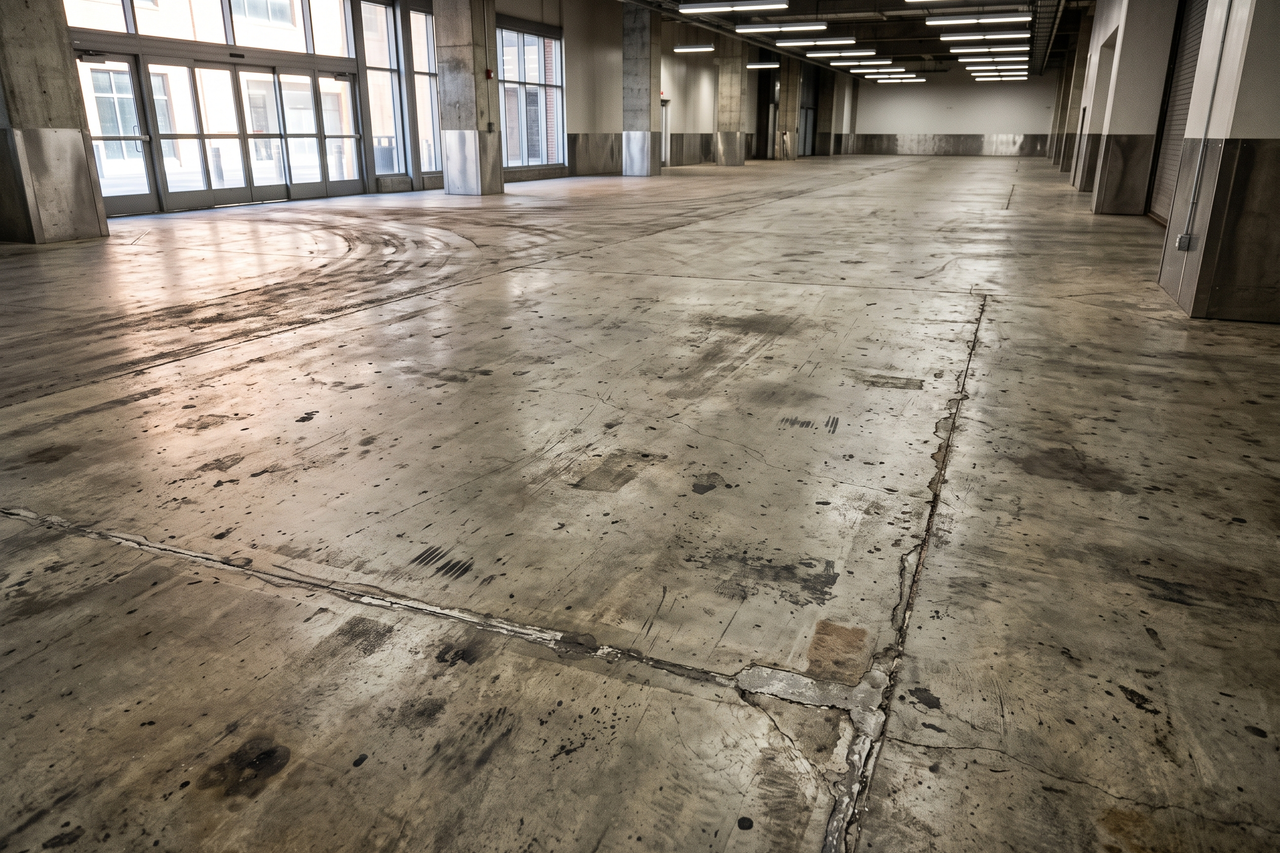
Business operations put concrete through a relentless cycle most surfaces never face at that sustained volume. Entry corridors, transaction counters, and service paths absorb foot and cart traffic across every shift. Equipment rolls along the same routes, concentrating force on the same contact zones. Without a sealed surface, the concrete takes in whatever reaches it — and the cumulative effect compounds.
A worn floor registers with customers before a product display, staffing, or signage gets a chance to. Scuffing along main walkways, staining near service counters, and deteriorated areas at entry points all leave an impression before an interaction begins. The floor reflects a condition the business is projecting whether or not it intends to.
Open concrete also creates a maintenance burden that grows in proportion to how much the surface degrades. Once the slab develops surface fractures and opens up, routine mopping and sweeping accomplish less with each pass. The effort stays constant; the results don’t.
The Right Floor Starts With Understanding Your Space
Commercial floors don’t operate under interchangeable conditions. A grocery receiving corridor, a medical office lobby, an auto dealership showroom, and a food-service prep area each impose different demands — in terms of what moves across the surface, what contacts it chemically, how frequently it gets cleaned, and what the business needs it to look like from day to day.
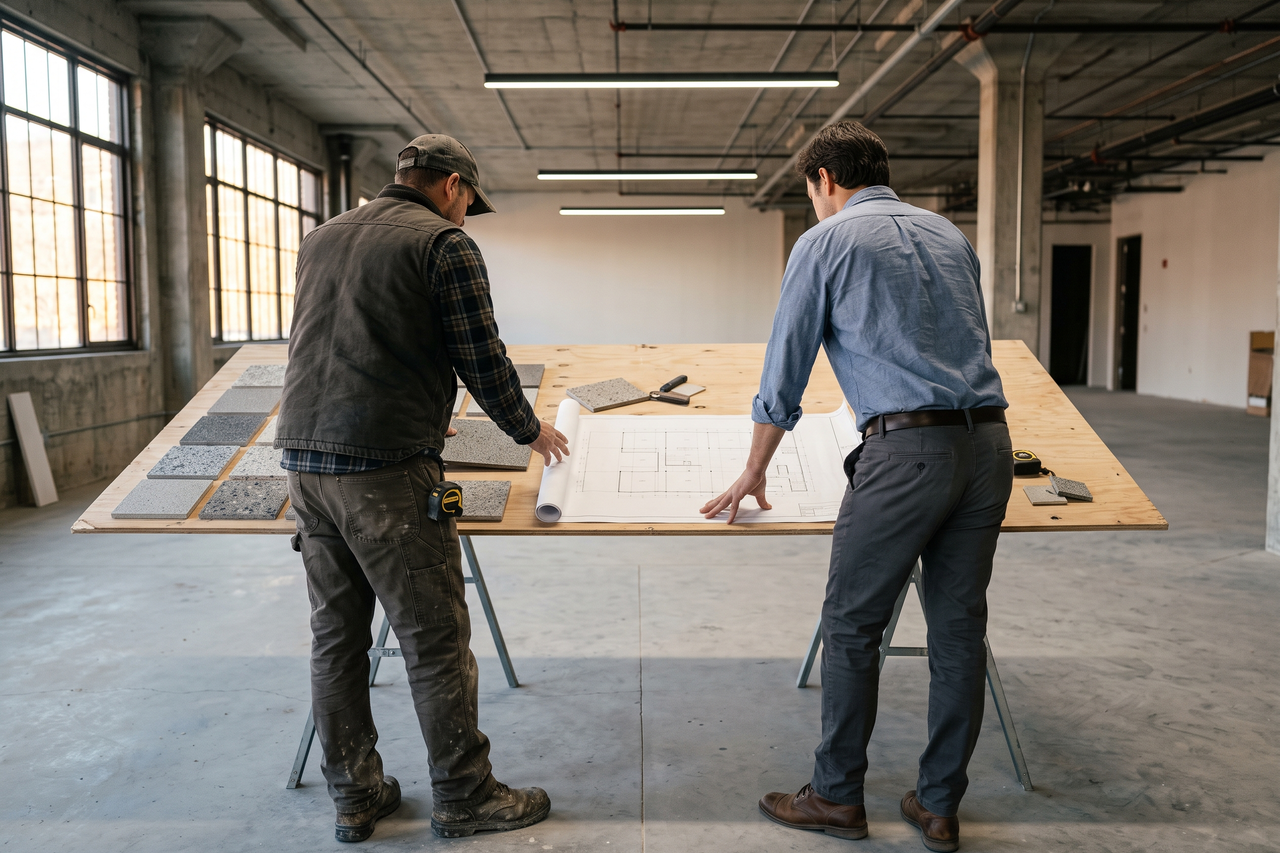
A contractor assessing a commercial floor begins with how that floor is actually used: the vehicles and traffic it sees, the cleaning products applied on a regular schedule, whether surface appearance has a direct effect on business outcomes, and what constraints apply to the timing and scope of the installation. The coating selection follows from that picture rather than from a default assumption.
Surface options span a wide range to fit the variety of commercial settings. Solid single-color systems suit utilitarian work areas well; chip broadcast coatings introduce texture alongside visual interest; metallic coatings work well in presentation spaces and showrooms where the floor plays an active role in how customers read the space.
A Commercial Flooring Project Without the Guesswork
A commercial coating project follows a clear path from first contact through finished floor. Here is how that sequence unfolds.
01
Tell Us About Your Property
Describe the facility type, how the floor is used during a normal business day, the current condition of the surface, and any project constraints the contractor needs to account for.
02
Get a Flooring Plan
An independent contractor visits the site, examines the concrete, evaluates how the space functions in practice, and develops a preparation and coating plan suited to that specific floor.
03
Transform Your Space
The contractor manages surface preparation and coating application after reviewing the full project sequence with you beforehand. How the project unfolds in practice depends on the floor scope, the system selected, and what the contractor determines before work begins.
Planning a Commercial Flooring Project?
Tell us what the space is and what you need the floor to withstand. We’ll work to connect you with an independent flooring contractor who can review the project and, if it’s a fit, prepare a customized estimate. Floor dimensions or photos of the current surface are helpful if you have them on hand.
The Wrong Floor Can Become an Expensive Problem
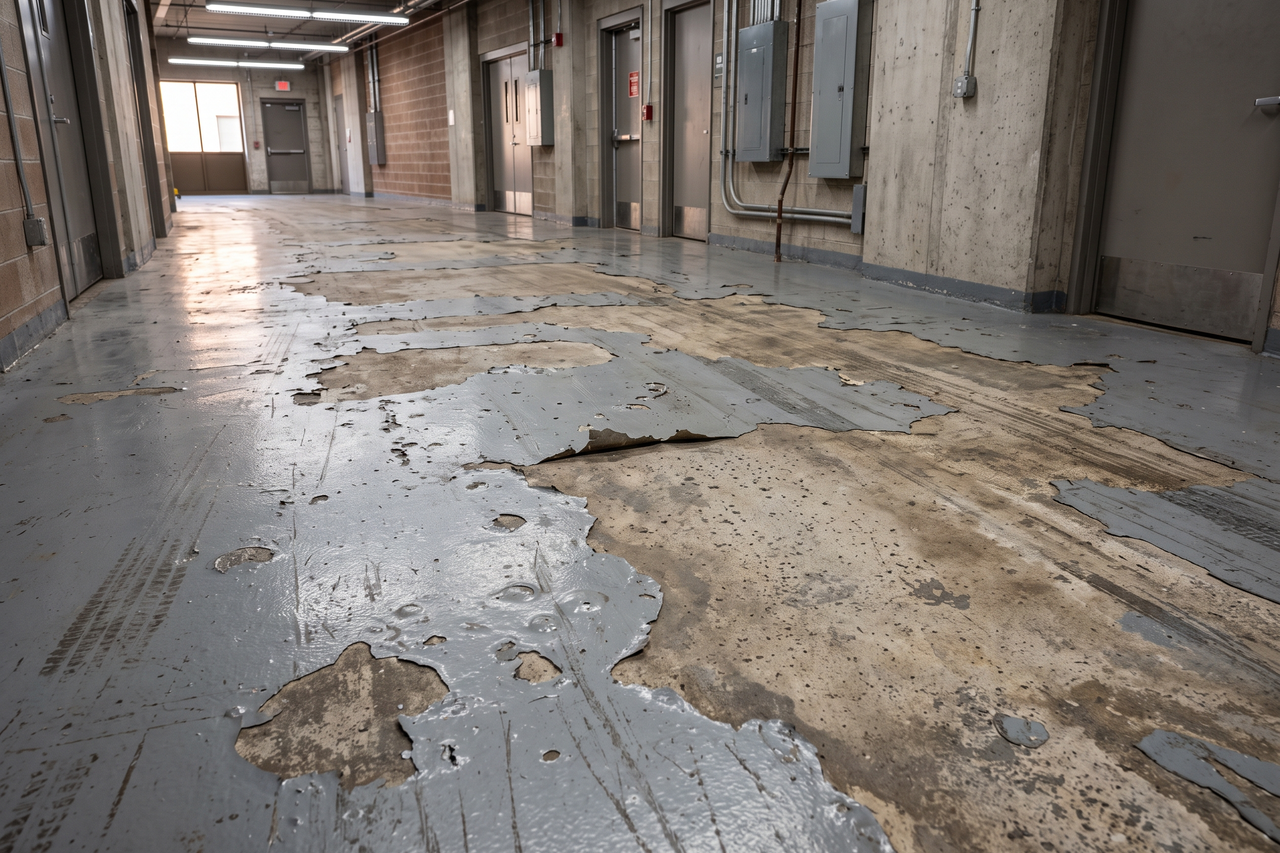
Picture a high-contact zone — a checkout lane or main service corridor — where coating has begun separating at the edges. What looks like a cosmetic issue develops into something more: raised edges present a contact hazard, and the gap accumulates debris that standard cleaning passes can’t fully clear.
Addressing that failure inside an operating business involves disruption well beyond the cost of materials and labor. The affected zone must be taken out of use, inventory or fixtures relocated, the existing coating stripped, the underlying concrete evaluated and addressed, and a new system applied — all at a point in the schedule the business didn’t plan for and may not be able to absorb cleanly.
Selecting a system matched to the actual conditions and investing in thorough concrete preparation before coating is applied is how that sequence of events gets avoided.
A Floor That Makes Your Space Work Better
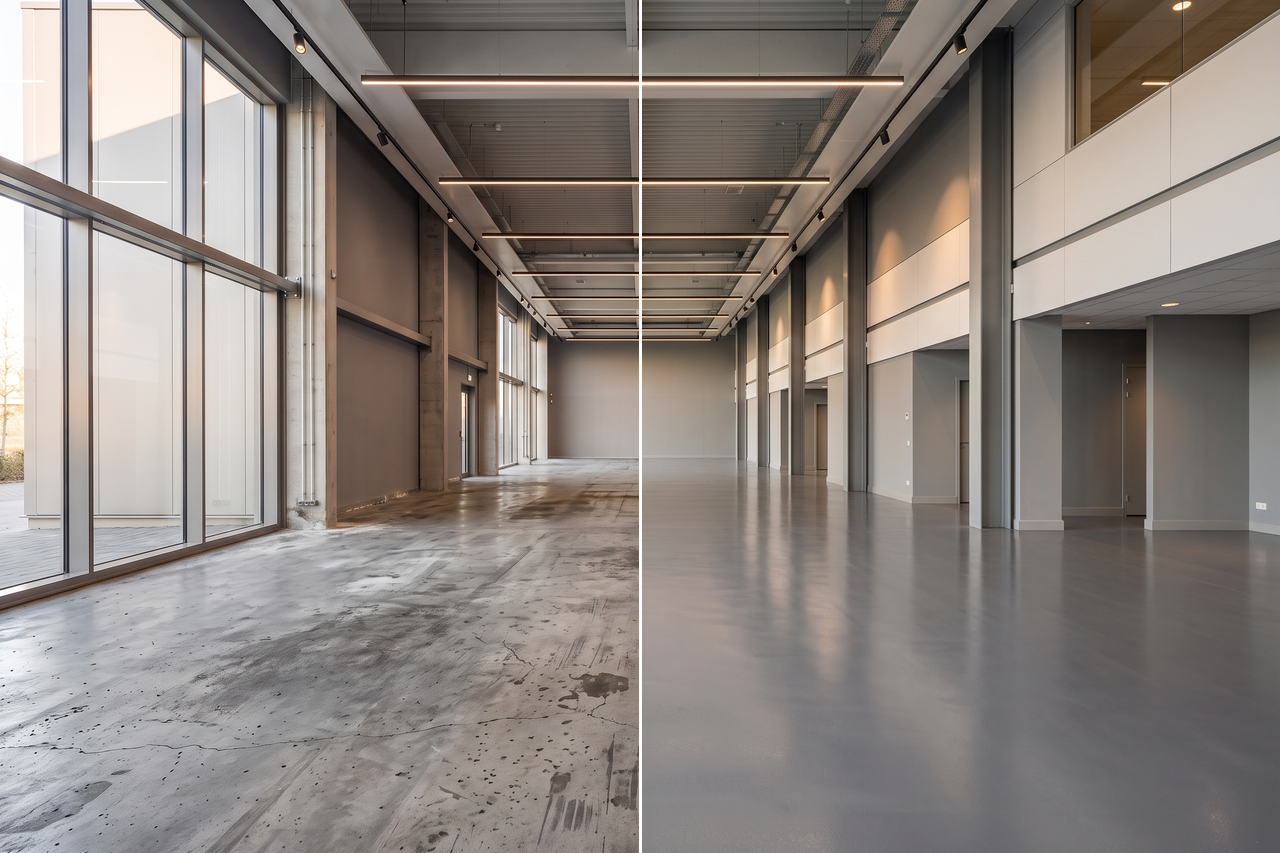
When the coating system fits the environment the floor operates in, day-to-day upkeep becomes a noticeably different exercise. Spills stay at the surface rather than penetrating the slab, so cleaning passes accomplish more without requiring special products. The floor is better equipped for ongoing use than bare concrete, which tends to break down gradually under the same conditions.
Sealed concrete reflects light at higher intensity than open slab, and that surface-level change can meaningfully brighten service aisles and work areas without touching the overhead fixtures. Aisle striping, color zone boundaries, and wayfinding markings can be incorporated based on what the system allows and what the contractor establishes as appropriate for the layout.
A coating built for the space it’s in turns the floor from a maintenance obligation into a functional part of how the business operates.
What Does Commercial Epoxy Flooring Cost?
The final number reflects project-specific variables: the amount of floor area being coated, what condition the slab is in, how much grinding and crack repair the concrete requires, which product system fits the environment, and the selected finish. Specialized demands — elevated chemical tolerance, heavier traction profiles, or textured finishes — can expand both the preparation and product scope.
Whether the work can be organized around the facility’s operating schedule or divided into defined portions is a conversation best had with the contractor early, while the estimate is still being assembled.
Common Commercial Flooring Questions
Will the business need to close while floor work is happening?
It depends on the facility layout and what the project actually requires. Certain spaces allow adjacent areas to stay in use while one section is being addressed; others work better with the full floor available at once. Figuring out which arrangement fits happens during the estimate conversation, once the contractor understands the space and the project scope.
How involved is routine upkeep on a sealed commercial floor?
Routine maintenance on sealed concrete is far less demanding than on bare slab. Spills can be addressed before they penetrate the surface without special cleaning agents, and regular sweeping and mopping handles the bulk of ongoing care. Sealed concrete holds up to regular cleaning demands far more consistently than raw, unsealed concrete exposed to the same ongoing use patterns.
Can the surface hold up to heavy carts and powered equipment?
That depends on which coating system is installed and what loads the floor is actually asked to support. Frequent heavy equipment, powered vehicles, and high-crossing-rate traffic often call for a thicker system build with greater abrasion resistance. The contractor evaluates equipment type, load characteristics, and crossing frequency before making a recommendation.
How does a contractor determine which coating system fits a specific business?
The evaluation draws on the specifics of the space: what the floor sees on a typical day, what loads and traffic patterns it handles, which cleaning products and chemical substances contact it regularly, what the business requires the surface to look like, and any constraints on timing or access. That information shapes the recommendation rather than a one-size-fits-all selection.