
Epoxy vs. Polyaspartic Flooring: What's the Difference?
Two distinct coating chemistries, two different performance profiles — both anchored to the same concrete beneath the floor. How they cure, how they hold up under direct sunlight, and what they demand from the applicator differ in ways that matter when choosing a system for a particular space. Matching the right coating to a floor depends on the conditions that floor actually lives in.

The Short Answer
Epoxy has served as the standard concrete floor coating across residential and commercial applications for generations — its behavior is well understood, and experienced applicators have worked with it extensively. Polyaspartic generally cures faster than many traditional epoxy systems, offers better UV resistance, and remains workable across a broader temperature range. Those characteristics make it the stronger choice in certain environments — not across the board. The right coating for a specific floor depends on sun exposure, the temperature range of the space, the slab's current condition, and how the area is used. We'll work to connect you with an independent flooring contractor who can review the project and, if it's a fit, prepare a customized estimate that reflects your floor's needs.
Key Differences
Here is how the two coating families compare, and what to weigh when choosing between them.
Epoxy
Epoxy is a two-component product — resin and hardener are combined at the point of application, triggering a chemical reaction that produces a hard, dense layer bonded directly to the concrete. Once fully cured, the coating withstands vehicle traffic, foot traffic, and the chemical spills common in residential garages and light commercial environments. Available finishes include solid colors, vinyl chip blends, and metallic effects. The longer working window after mixing — compared to polyaspartic — gives applicators the control to cover large floors and multi-coat builds without pressure.
Polyaspartic
Polyaspartic belongs to the polyurea family of coatings and generally cures faster than many traditional epoxy systems. That faster cure can support tighter project sequencing but also shortens the application window after mixing — a fully prepared site and a clear workflow are essential before mixing begins. Polyaspartic topcoats carry UV-stable chemistry, which resists the color shift that some epoxy formulations develop after prolonged sun exposure. The product also maintains flexibility and adhesion across a broader temperature range than most standard epoxy formulations.
Which Is Right for You
Neither system holds an automatic advantage. A product from either family, correctly applied to concrete that has been adequately prepared, is capable of delivering a durable and attractive finished surface. The more productive question is which suits the specific conditions: how much sunlight reaches the floor, the temperature range the space sees, the slab’s current condition, and the daily demands of the area. Those factors guide the contractor’s assessment and inform the coating recommendation.
Durability
Measured purely on toughness, the two systems sit very close to each other. Each produces a hard, stain-resistant surface that substantially outperforms bare concrete, paint, or consumer floor products. The practical distinctions between them appear in specific performance characteristics.
The clearest difference is how each handles UV exposure. Standard epoxy formulations can develop yellowing or a hazy finish with sustained direct sunlight — a concern in garages with wide door openings, rooms with skylights, or spaces with significant lateral window light. UV-stable polyaspartic coatings are formulated to resist that color change, which is why they are regularly specified for sun-exposed garages, covered outdoor areas, and well-lit commercial spaces.
Standard epoxy can be sensitive to cooler ambient temperatures, which affects the curing process and the coating’s long-term behavior in unheated structures. Polyaspartic holds its flexibility and adhesion through a broader temperature range, making it the more dependable choice for garages, storage structures, and commercial environments where climate control is absent.
Install Time
Surface preparation is a substantial part of any coating project and directly influences how the finished floor performs. Our guide to concrete preparation for epoxy flooring explains that stage step by step.
The point where the two systems diverge most on project timing is the interval between coats. Because polyaspartic generally cures faster than many traditional epoxy systems, successive coating steps can follow each other without extended waiting periods. Multi-coat epoxy builds require each layer to reach adequate cure before the next is applied, adding time to that phase.
From the property owner’s perspective, a shorter interval between coating steps can mean a briefer interruption to normal use at the property. For the applicator, the faster-curing product requires a site that is completely ready before mixing starts — there is limited room to adjust once application is underway.
Total project duration is specific to each job. Square footage, preparation needs, coating system depth, and site conditions all shape the final timeline. Before starting, the installer reviews the expected timeline with you.
Which Is More Expensive?
A full breakdown of how project costs are built and what estimates should cover is in the epoxy floor coating cost guide.
At comparable quality levels, polyaspartic products are priced higher than standard epoxy, a reflection of the UV-stable formulation and the faster cure profile. Labor costs vary by project and can be similar between the two systems, and a faster progression through coating stages can sometimes reduce the overall cost difference.
Should cost be the deciding factor? On its own, no. A coating that doesn’t fit the slab or the demands of the space performs below a well-matched alternative regardless of price. The coating that fits the floor is the better investment, wherever it falls on the cost spectrum.
Which Is Better for Your Garage?
When Epoxy Makes Sense
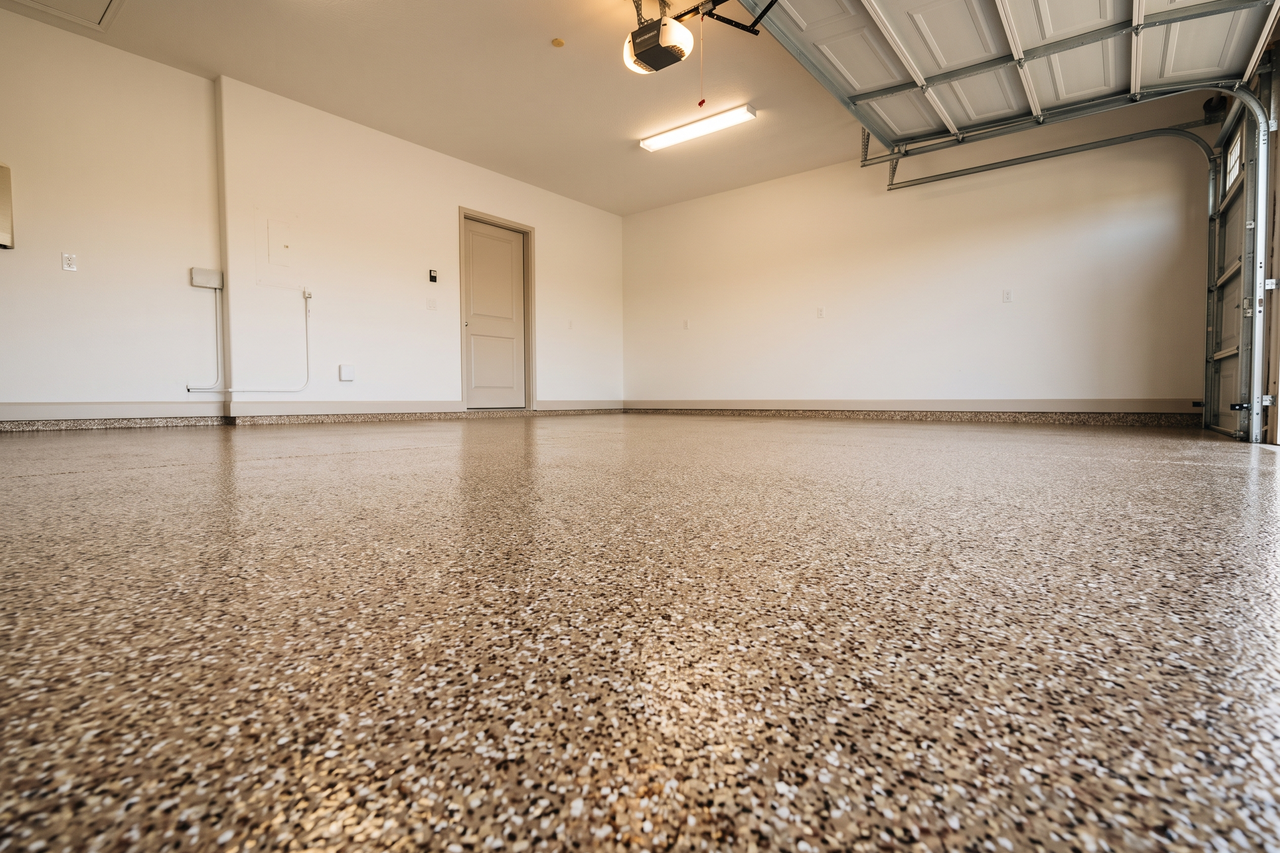
A garage that sees limited direct sunlight, or one where temperatures remain relatively stable through the year, is a strong candidate for an epoxy system. The extended working window after mixing allows an applicator to cover large, open floor areas and manage multi-step coating builds without being rushed. Solid color and vinyl chip finishes come in a broad range of epoxy options, and experienced applicators are thoroughly comfortable with how epoxy performs in residential environments.
When Polyaspartic Makes Sense
When direct sunlight reaches the garage floor through the door opening, windows, or skylights, polyaspartic’s UV resistance holds an advantage over products that can discolor under extended sun contact. Significant temperature variation and a preference for keeping the space available are also conditions that point toward polyaspartic. Many coating projects combine both materials — an epoxy base for adhesion depth and coating build, with a polyaspartic topcoat for UV resistance and surface durability — a well-tested hybrid approach that draws on the strengths of each.
Why Professional Installation Matters
For those focused on a garage project, the garage floor coatings guide covers finish options and the full project sequence from initial assessment through the final coat.
What determines long-term performance more than which coating family is chosen is how well the system fits the actual slab. Both epoxy and polyaspartic perform best on concrete that has undergone mechanical profiling, cleaning, and moisture assessment before the coating goes on.
Before any work begins, the contractor assesses the concrete, lays out the recommended system with the rationale behind it, and addresses questions. Where site conditions make a coating unsuitable, the property owner finds out before signing off — not once the coating is already down.
Frequently Asked Questions
Is it common to combine epoxy and polyaspartic in a single coating system?
Yes, and it is a well-established approach. An epoxy base layer contributes adhesion depth and coating build; a polyaspartic topcoat addresses UV resistance and surface wear. Epoxy applied over cured polyaspartic is harder to bond reliably and is generally not recommended. Which layering approach works depends on the surface conditions; the contractor makes that determination after assessing the slab.
Does polyaspartic make the overall project shorter?
The coating phase may take less time. Because polyaspartic generally cures faster than many traditional epoxy systems, there is less waiting required between individual coating steps. Surface preparation — profiling, crack repair, moisture testing — takes the same amount of work regardless of the product selected. The total timeline includes all of that. The installer covers the expected schedule before anything starts.
Do all epoxy floors eventually turn yellow?
Not all epoxy products behave the same way. Certain standard formulations can discolor or develop a hazy surface appearance when exposed to direct sunlight over time — how pronounced that becomes depends on the specific product chemistry and how much sun actually reaches the finished surface. Polyaspartic and polyurethane topcoat products with UV-stable chemistry are formulated to resist that color change and are commonly applied as the topcoat in sun-exposed areas. Whether discoloration is a realistic concern depends on which system is specified and how much sunlight the surface actually receives.
Which coating handles hot tire pickup better?
Hot tire pickup is generally a preparation and product-selection issue rather than a distinction between coating families. The problem typically occurs when a vehicle’s hot tires bond temporarily with the coating surface, lifting material away as the rubber cools. Contributing factors include insufficient concrete profiling, a product not matched to the use conditions, and vehicles returned before full cure. Whichever coating is used, the one properly suited to the conditions, applied to concrete that has been adequately prepared and fully cured before vehicles use the floor, is better equipped to handle it. Preparation and cure compliance matter more than which coating family is chosen.
Do both epoxy and polyaspartic support decorative options such as flake and metallic finishes?
Generally, yes. Both coating families support broadcast vinyl chip, solid color, and metallic pigments. The specific choices available depend on the manufacturer and the installer’s product line. The contractor presents what is available within the system recommended for your floor.
Is professional application necessary, or can a homeowner handle these coatings?
Professional-grade products in both categories are engineered for trained applicators working with proper equipment. Polyaspartic specifically has a compressed application window after mixing that calls for precise timing and experience to manage correctly. Products sold to consumers at hardware stores occupy a different category entirely — easier to apply but not equivalent in performance or durability. A professional applicator brings the surface preparation knowledge and technical skill the specific floor requires.
Ready to Choose the Right Coating for Your Floor?
Serving Murray, KY and surrounding areas. We’ll work to connect you with an independent flooring contractor who can review the project and, if it’s a fit, prepare a customized quote for the coating system best suited to your floor.